





How to Choose the Right Solar Panel System for Your Home?
This 2025 guide helps homeowners select the best solar panel system by evaluating N-Type TOPCon efficiency, smart energy management (SEMS), and Vehicle-to-Home (V2H) readiness. Learn to calculate real energy demand, compare top inverter brands, and maximize ROI with the 30% Federal Tax Credit.
- What are the most important factors when choosing a solar panel system?
- Core Pillars of Selection:
- Quick Summary: The Homeowner’s Solar Checklist
- Step 1: Calculating Your Real Energy Demand for 2026
- Forecasting Energy Growth:
- Step 2: Decoding Solar Technology (N-Type, TOPCon, and Beyond)
- Why Tech Specs Matter:
- Step 3: Smart Infrastructure and Storage Integration
- Battery and V2H Integration:
- Expert Tips and Common Mistakes to Avoid
- Expert Tips:
- Common Mistakes:
- The 2026 Financial Landscape: Incentives and ROI
- ROI Factors:
- FAQ
- What is the average cost of a solar panel system in 2026?
- How many solar panels are needed to power a standard 4-bedroom home?
- Can I use solar panels to charge my EV at night?
- What is the difference between N-Type and P-Type solar cells?
- Does solar increase my property value in 2026?
- How long do solar panels actually last?
- Is my roof suitable for solar panels?
- What happens to solar panels during a power outage?
- References
Choosing a solar panel system in 2025 requires looking beyond simple wattage numbers to focus on long-term efficiency, smart integration, and future-proofing for electric vehicles. This guide breaks down the critical technical and financial factors you need to know.
What are the most important factors when choosing a solar panel system?
To choose the right solar panel system, you must evaluate three core pillars: energy efficiency (N-type vs. P-type), hardware durability (25-30 year warranties), and future-proofing for bidirectional EV charging. A modern system isn't just about generating power today; it is about managing energy for the next two decades.
A 2026-ready system requires a balance between nameplate wattage, low temperature coefficients, and integration with AI-managed storage batteries to maximize ROI under evolving net metering policies. As electricity demands rise with the adoption of heat pumps and EVs, the ability of your system to adapt—specifically through Smart Energy Management Systems (SEMS)—becomes as important as the panels themselves.
Core Pillars of Selection:
- Cell Technology: Prioritize N-Type TOPCon Solar Cells for higher efficiency (over 25%) and lower annual degradation rates (under 0.4%).
- Inverter Intelligence: Ensure your inverter supports grid-forming capabilities and intelligent load management.
- Warranty Depth: Look for "all-in-one" warranties that cover labor, shipping, and parts, not just the hardware.
Quick Summary: The Homeowner’s Solar Checklist
A complete solar assessment involves verifying roof structural integrity, calculating future kilowatt-hour (kWh) loads including EVs, and selecting Tier 1 hardware components. Use this checklist to vet quotes and installers effectively.
- Assess Usage: Calculate current annual kWh usage and add 3,000-4,000 kWh for each planned electric vehicle.
- Roof Audit: Verify south-facing orientation and structural capacity for Bifacial Solar Panel Efficiency gains if using ground mounts or white roofs.
- Technology Check: Select Tier 1 manufacturers (like JinkoSolar or Trina Solar) offering N-Type TOPCon or HJT cells.
- Inverter Selection: Ensure the inverter is V2H-ready and compatible with smart home protocols.
- Financials: Compare the Total Cost of Ownership (TCO) rather than just the upfront price per watt.
Step 1: Calculating Your Real Energy Demand for 2026
Your "real" energy demand is not your past utility bill; it is your projected consumption adjusted for electrification upgrades like heat pumps and EV charging. Failing to account for this future load is the most common sizing error homeowners make.
To size correctly, you must analyze your "Peak Demand" versus "Total Consumption." Utility companies are increasingly shifting to Time-of-Use (TOU) rates where electricity costs more during the evening. A system that only offsets 100% of your volume but generates it all at noon (when power is cheap) may still leave you with a bill. Digital twin modeling tools can simulate your roof's specific sunlight exposure to predict exactly when your power will be generated.
Forecasting Energy Growth:
- Electric Vehicles: An average EV consumes roughly 30 kWh per 100 miles. Driving 10,000 miles a year adds ~3,000 kWh to your load.
- HVAC Transition: Switching from gas to electric heat pumps can double your winter electricity usage.
- Offset Strategy: Aim for 110-120% offset of current usage to accommodate this growth without needing a system expansion later.
Step 2: Decoding Solar Technology (N-Type, TOPCon, and Beyond)
N-Type TOPCon Solar Cells have replaced P-Type PERC as the new industry standard for 2026, offering efficiencies exceeding 25% and significantly lower degradation rates. While P-Type panels were the norm for years, they suffer from Light Induced Degradation (LID), losing significant power in the first year.
Recent data confirms that N-Type TOPCon Solar Cells are superior for residential investments. In November 2025, JinkoSolar verified a world record efficiency of 27.79% for these cells. For homeowners, this means more power per square foot and a system that retains roughly 87-89% of its power after 30 years, compared to 80-82% for older tech.
Why Tech Specs Matter:
- Bifacial Solar Panel Efficiency: Bifacial panels capture light from both sides. While ideal for ground mounts, they are less effective on flush roof mounts unless you have a highly reflective white roof.
- Temperature Coefficient: N-Type cells perform better in heat. A coefficient of -0.29%/°C means they lose less power on hot summer days compared to P-Type panels (-0.35%/°C).
- Efficiency Baseline: Do not settle for less than 22% module efficiency in 2025.
Step 3: Smart Infrastructure and Storage Integration
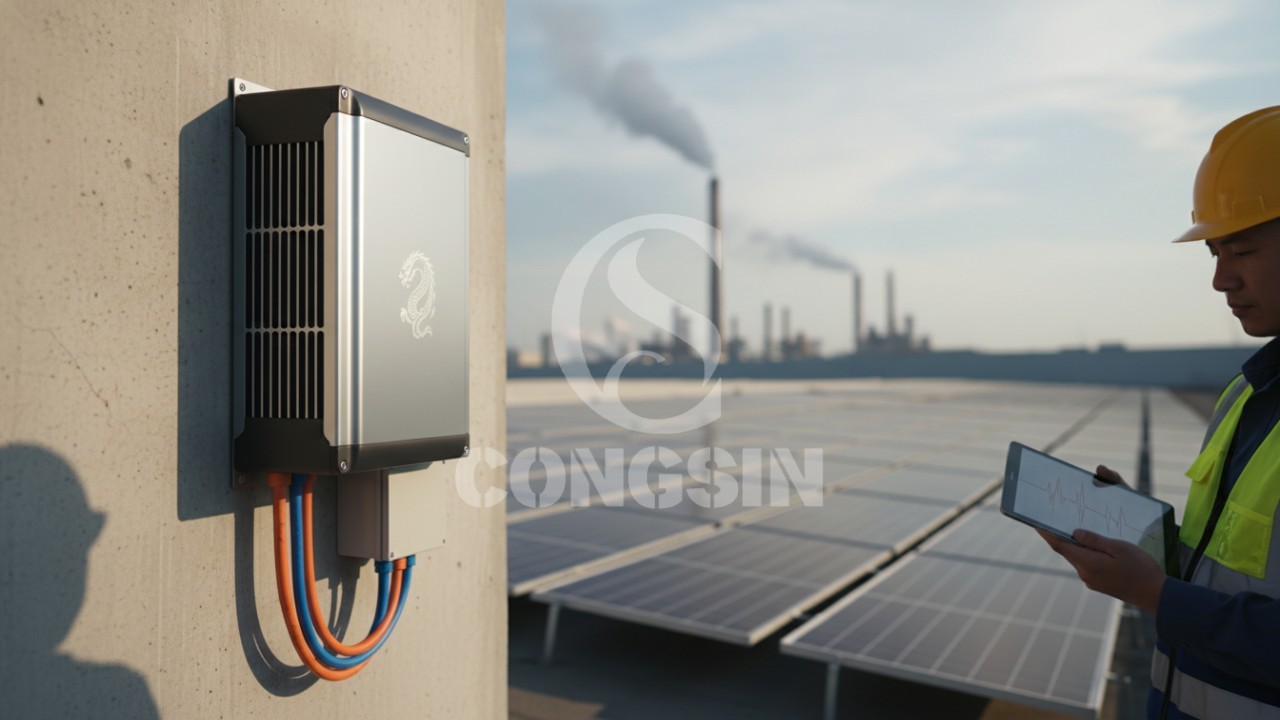
The modern solar setup relies on a hybrid inverter acting as a central brain to manage flows between the grid, battery, home, and EV. This is where the hardware choices become critical for functionality.
When researching the best solar inverter, you will encounter a market dominated by Asian manufacturing. In fact, solar inverter China brands like Huawei and Sungrow hold over 55% of the global market share due to their advanced R&D in hybrid systems. However, brands like SolarEdge and Enphase remain top choices in the US for their module-level optimization, which is crucial for roofs with shade.
Battery and V2H Integration:
- Vehicle-to-Home (V2H) Integration: This technology allows your EV to act as a massive backup battery. Compatible vehicles for 2025 include the Ford F-150 Lightning, Kia EV9, and the upcoming VW ID.4 (via bidirectional chargers).
- Battery Chemistry: Choose Lithium Iron Phosphate (LFP) batteries over NMC types. LFP batteries are safer and last longer (6,000+ cycles).
- Smart Energy Management Systems (SEMS): AI-driven software that learns your usage patterns to automatically sell power to the grid when prices are high and store it when prices are low.
Expert Tips and Common Mistakes to Avoid
The most critical expert tip is to prioritize "all-in-one" warranties that cover labor, shipping, and parts for 25 years to avoid surprise repair costs. Many manufacturers cover the part, but charging $300 for a truck roll to replace a $50 part ruins your ROI.
Expert Tips:
- Check Net Metering 3.0: In states like California, batteries are no longer optional—they are financially necessary to store cheap solar power for expensive evening use.
- Vet the Installer: Choose a local installer who has been in business for at least 5-10 years. Long warranties are useless if the installation company goes bankrupt.
Common Mistakes:
- Ignoring Shade: Using a string inverter without optimizers on a shaded roof can drop system output by 50% from just one shaded panel.
- Cheapest Price Per Watt: A system costing $2.50/watt with poor support often costs more long-term than a $3.00/watt system with premium service.
The 2026 Financial Landscape: Incentives and ROI
The Federal Investment Tax Credit (ITC) remains at 30% through 2032, allowing you to deduct 30% of your total solar and battery installation cost from your federal taxes. This is the single largest driver of solar ROI in the United States.
Financially, solar is a robust asset. According to 2024 data from Zillow and SolarReviews, homes with solar panels sell for approximately 6.9% more than comparable non-solar homes. With the average cost of solar hovering between $2.50 and $3.50 per watt before incentives, the payback period in most states is between 6 to 9 years.
ROI Factors:
- SRECs: In states like New Jersey and Massachusetts, you earn cash for every MWh generated.
- LCOE: The Levelized Cost of Energy for solar is roughly $0.06-$0.08/kWh over 25 years, compared to utility rates of $0.18-$0.40/kWh.
- Financing: High-interest rates favor cash purchases or short-term loans over 25-year solar loans, which often carry high dealer fees.
FAQ
What is the average cost of a solar panel system in 2026?
Costs vary by region but generally range between $2.50 to $3.50 per watt before incentives. For a standard 6kW system, this equates to a gross cost of $15,000 to $21,000. Adding battery storage typically increases the price by $10,000 to $15,000 depending on capacity.
How many solar panels are needed to power a standard 4-bedroom home?
Typically, 20 to 28 panels are required to build a 10kW to 12kW system, which is common for a 4-bedroom home. The exact number depends on the panel wattage (e.g., 450W vs 550W) and the local irradiance (sunlight hours) your roof receives.
Can I use solar panels to charge my EV at night?
Yes, but this requires a battery storage system to store the solar energy generated during the day for night use. Alternatively, Vehicle-to-Home (V2H) Integration allows you to use your EV's battery to power your home during outages, though you cannot charge the car from the panels at night without a separate stationary battery.
What is the difference between N-Type and P-Type solar cells?
N-Type cells are the superior technology for 2025, offering higher efficiency (25%+) and lower degradation rates (0.4% per year). P-Type cells are older technology; while initially cheaper, they degrade faster and offer lower efficiency, making them a poorer long-term investment.
Does solar increase my property value in 2026?
Yes, recent market data indicates that homes with owned solar systems sell for 4% to 6.9% more than those without. Modern buyers increasingly view energy-efficient homes with locked-in low energy costs as a premium asset.
How long do solar panels actually last?
Most modern Tier 1 panels come with a performance warranty of 25 to 30 years. Even after 30 years, N-Type panels are expected to produce roughly 87% of their original capacity, meaning they can continue generating useful power for decades longer.
Is my roof suitable for solar panels?
Ideally, you need a south-facing roof with a 15-40 degree pitch and little to no shade. If your roof is older and needs replacement within the next 5 years, it is highly recommended to replace the roof before installing solar to avoid costly removal and re-installation fees later.
What happens to solar panels during a power outage?
Standard grid-tied systems will shut down for safety to prevent back-feeding electricity into the grid. To have power during an outage, you must have a system with backup battery storage or a specialized sunlight-backup inverter configuration.
References


Modified Sine Wave Inverters
Can I customize the color and logo?
Yes, OEM/ODM customization is supported.
Can it drive a 3000W air conditioner?
Yes. Air conditioners have instantaneous power during startup (about 2-3 times the rated power), and this product has a peak power of 6000W, which can meet the startup and operation needs of a 3000W air conditioner; the battery capacity must be ≥150Ah to ensure continuous power supply.
What is the benefit of the UPS function? A2:
It automatically switches to battery power when AC fails.
Distributor
Do I need to carry inventory?
We offer flexible inventory options based on your market needs, and we can assist with supply chain management.
Pure Sine Wave Inverters
Will reversing the positive and negative poles damage the device when connecting the battery?
The device has a built-in reverse connection protection function, which will automatically cut off the circuit when the positive and negative poles are reversed to avoid damage caused by reverse current inflow; just adjust the connection order of the positive and negative poles of the battery clip and re-power on to use normally.
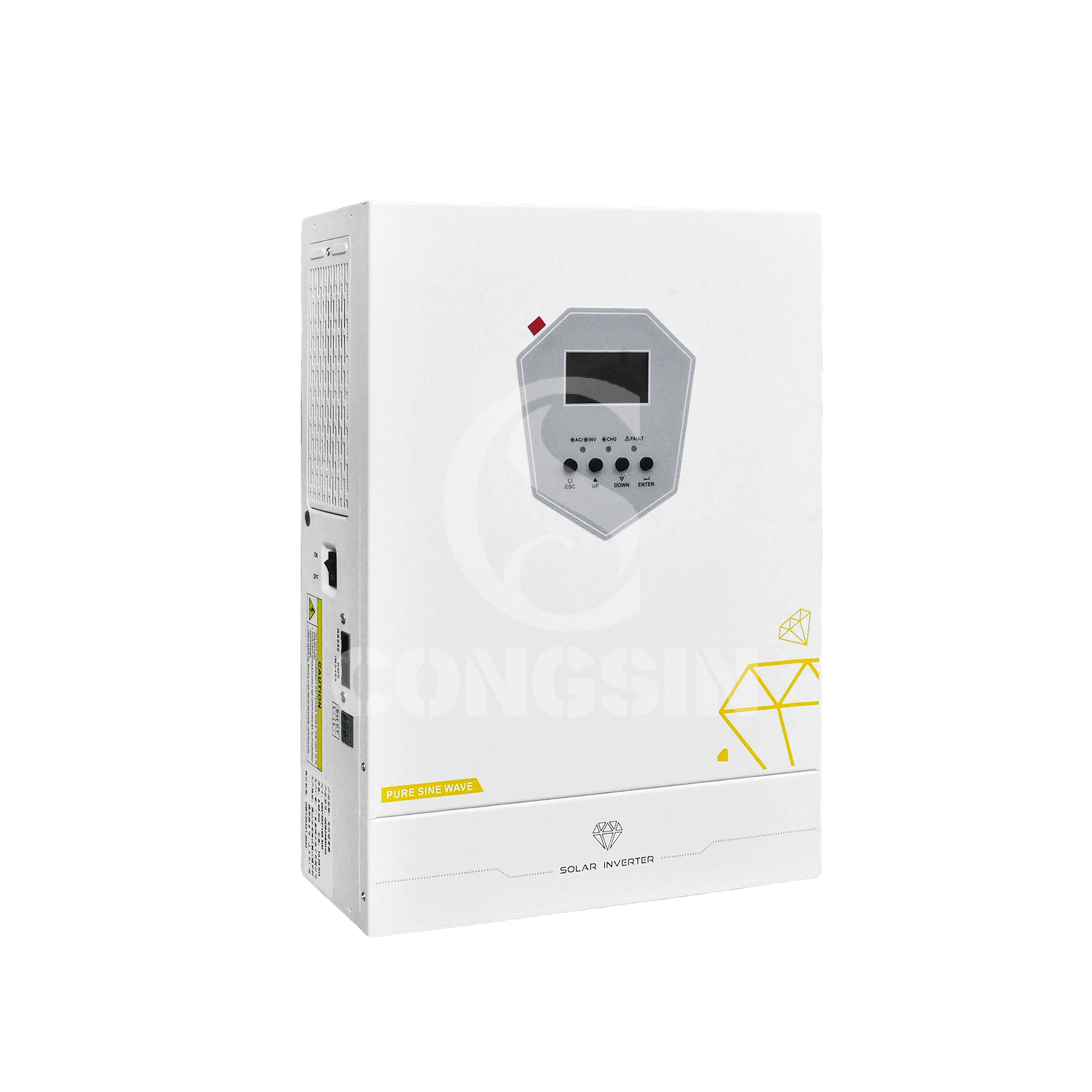
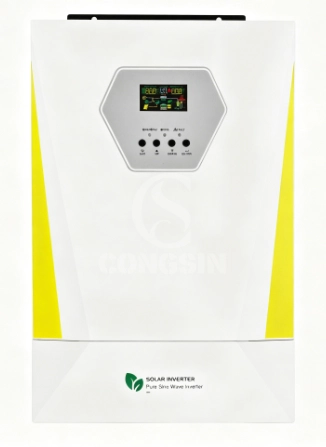
Power your solar system efficiently with the Congsin 4000W and 6000W Hybrid Inverter. Featuring an integrated MPPT Controller, this CE Certified inverter ensures optimal energy conversion. Monitor performance effortlessly via the intuitive LCD Display. Reliable, powerful, and ready for your sustainable energy needs.
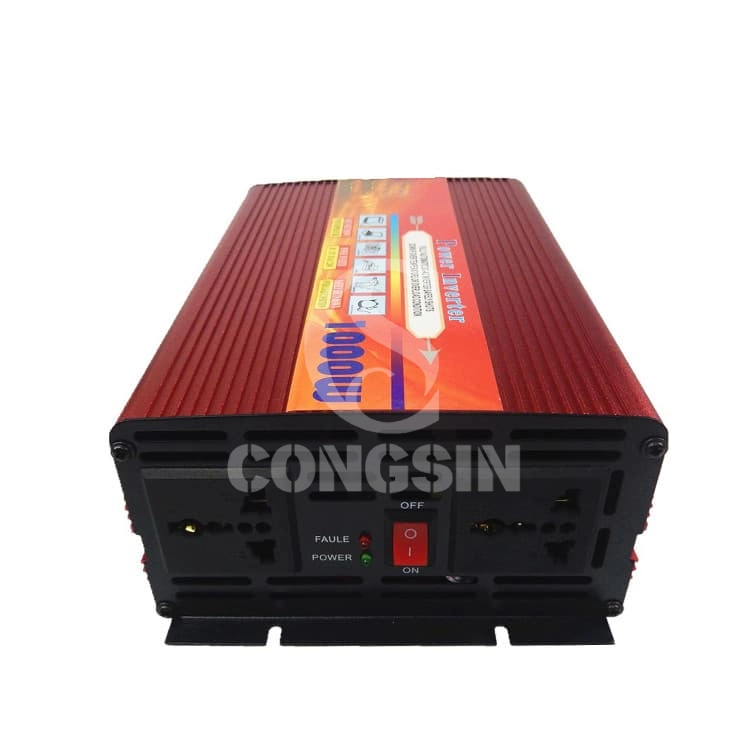
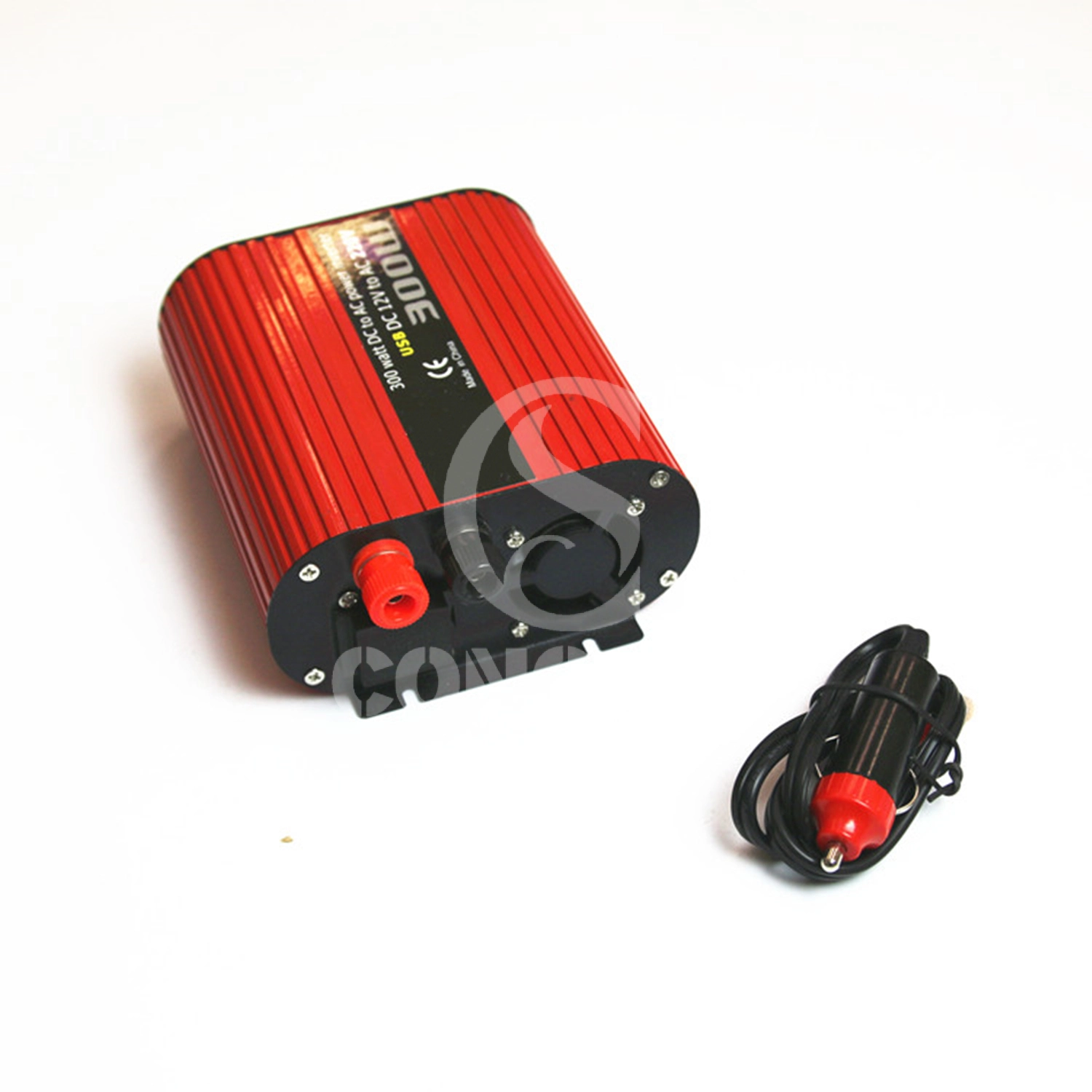
Congsin's Portable 150W Modified Sine Wave Inverter powers your journey! This versatile Car Power Inverter with USB acts as a reliable 12V to 220V converter, ensuring an essential off-grid power supply. With dual USB ports and a universal socket, enjoy convenient power on the go.
Get in Touch with Our Team
You can also communicate with us directly through our online contact form. Please fill in the following information, and our team will contact you as soon as possible after receiving your message.

CONGSIN is a trusted OEM factory for power inverters, solar charge controllers, and DC converters. Reliable solutions for global B2B buyers.
 High Quality
 7/24 Service
 Guaranteed Warranty
© 2025 Congsin. All Rights Reserved.
 WeChat
 Scan QR Code
sin cong
teaimei10
Whatsapp: +8618028086791
Scan QR Code